


Comprehensive Upper GI Endoscopy Care in Phoenix, AZ
Upper GI endoscopy care helps evaluate the upper digestive tract to identify the causes of symptoms such as abdominal discomfort, swallowing difficulties, and persistent digestive issues. This minimally invasive procedure allows for a detailed examination of the esophagus, stomach, and upper small intestine to support accurate diagnosis and personalized care. Our board-certified surgeons at Phoenix Unified Surgeons provide advanced upper GI endoscopy care focused on identifying gastrointestinal problems and supporting better digestive health. For more information, contact us or request an appointment online. We are conveniently located at 20333 N 19th Avenue, Ste 230 Phoenix, AZ 85027.
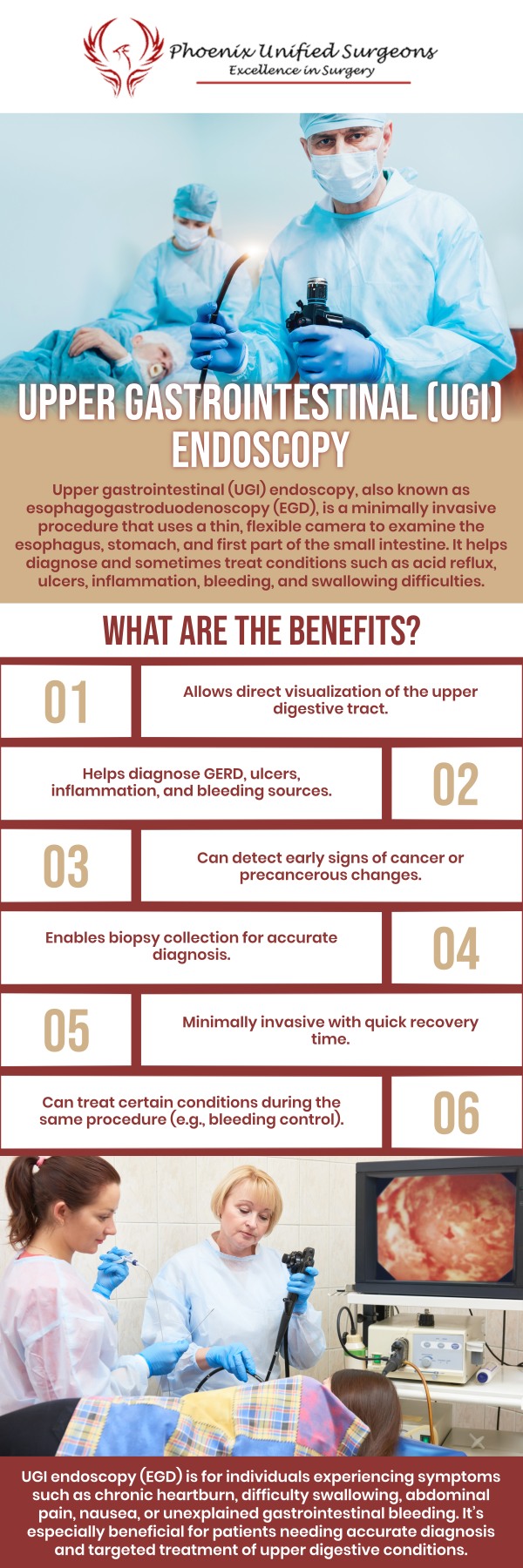
Table of Contents:
What is an upper GI endoscopy and why is it performed?
What conditions can an upper GI endoscopy help diagnose?
How should I prepare for an upper GI endoscopy?
Is an upper GI endoscopy painful?
How long does an upper GI endoscopy procedure take?
Supporting Better Digestive Health Through Upper GI Endoscopy Care With a Board-Certified Surgeon in Phoenix, AZ
An upper GI endoscopy is a minimally invasive procedure that allows our surgeons to closely examine the lining of your upper digestive tract, including the esophagus, stomach, and the first portion of the small intestine (duodenum). Using a thin, flexible tube equipped with a light and camera (endoscope), our specialists can visualize your upper GI tract in real time, helping to identify and address a variety of conditions.
Our surgeons may recommend this procedure if you are experiencing symptoms such as persistent heartburn, difficulty swallowing, unexplained nausea or vomiting, upper abdominal pain, gastrointestinal bleeding, or unexplained weight loss. Through EGD, we can accurately diagnose conditions including ulcers, inflammation, tumors, infections, and celiac disease.
What Can Be Done During the Procedure?
In addition to providing a clear view for diagnosis, your Phoenix Unified Surgeons can perform several therapeutic interventions during an upper GI endoscopy, including:
• Taking tissue samples (biopsies) for further analysis
• Controlling gastrointestinal bleeding
• Removing polyps or abnormal growths
• Stretching areas of narrowing (strictures) in the digestive tract
Upper GI endoscopy (esophagogastroduodenoscopy, or EGD) allows our experienced surgeons to directly visualize the lining of your esophagus, stomach, and the upper part of the small intestine (duodenum).
Our practice leverages the latest endoscopic technology to accurately diagnose and manage conditions affecting the upper digestive tract. Patients are referred to us for endoscopy to evaluate symptoms such as persistent upper abdominal pain, difficulty swallowing (dysphagia), chronic acid reflux, unexplained weight loss, or gastrointestinal bleeding.
Comprehensive Diagnostic Capabilities
Common conditions we identify and treat through upper GI endoscopy include:
• Gastroesophageal Reflux Disease (GERD): Chronic acid reflux can damage the esophagus over time. Our endoscopic assessment helps confirm the diagnosis and evaluate the severity of esophageal irritation or inflammation.
• Sources of GI Bleeding: Using endoscopy, our surgeons can identify and often treat causes of bleeding such as esophageal varices, Mallory-Weiss tears, and erosions.
• Celiac Disease: When symptoms or blood tests suggest this autoimmune condition, our surgeons obtain biopsies during endoscopy to confirm the diagnosis.
• Cancers and Tumors: Early detection of both benign and malignant tumors in the esophagus, stomach, or duodenum significantly improves outcomes. We perform careful inspection and biopsy as needed to rule out or confirm malignancy.
If you’re scheduled for an upper GI endoscopy with Phoenix Unified Surgeons, our team will provide personalized instructions to help ensure your safety and accurate results. General preparation guidelines include the following:
• Fasting Requirements
You will need to avoid eating and drinking for about six to eight hours before your procedure. An empty stomach helps provide a clearer view and reduces potential risks during the endoscopy.
• Medication Adjustments
Inform your Phoenix Unified Surgeons care team about all medications, supplements, and allergies. You may need to adjust certain medications, including blood thinners or diabetes medications, based on your health needs.
• Special Health Conditions
Patients with heart, lung, or other medical conditions may require additional preparation or monitoring. Our team will help create a safe plan for your procedure.
• Day of Procedure
Arrange for someone to drive you home after your upper GI endoscopy, as sedation may cause drowsiness. Wear comfortable clothing and avoid bringing valuables.
• Your Questions Are Important
Our surgeons and staff are available to address any concerns before your procedure. Following preparation instructions carefully helps support safe and effective care.
Many patients at Phoenix Unified Surgeons ask if an upper GI endoscopy is painful. Rest assured, this procedure is generally not considered painful, though some individuals may experience mild discomfort. To ensure your comfort, we use a local anesthetic spray to numb your throat before the procedure, and most patients receive intravenous sedation to help them relax. During the endoscopy, a thin, flexible instrument called an endoscope is gently inserted through the mouth and down the throat. Some patients may feel light pressure, a gagging reflex, or a sense of fullness in the throat, but actual pain is uncommon.
After your procedure, you might notice a slight sore throat, bloating, or mild cramping for a few hours—these effects are temporary and typically resolve on their own. If you experience any significant pain after the procedure, it’s important to contact us promptly, as this could indicate a rare complication.
An upper GI endoscopy typically takes about 15 to 30 minutes, though the exact time can vary depending on the reason for your visit and whether any additional procedures, such as biopsies or polyp removal, are required.
Before your procedure, our staff will help you prepare, which includes changing into a gown and administering sedation or local anesthesia to ensure a comfortable experience. After the endoscopy, you will be cared for in our recovery area for approximately 30 minutes to an hour while the sedative wears off.
While the endoscopic examination itself is relatively brief, please plan to spend a few hours from check-in to discharge. Our dedicated team will be with you every step of the way to answer your questions and provide personalized care.
Maintaining good digestive health often begins with understanding the underlying causes of symptoms such as persistent heartburn, abdominal discomfort, difficulty swallowing, nausea, or unexplained digestive changes. At Phoenix Unified Surgeons, Dr. Debora J. Fox-McClary, M.D., MBA, FACS, FASCRS, and her experienced board-certified surgeons use upper GI endoscopy as a valuable diagnostic tool to evaluate the upper digestive tract, including the esophagus, stomach, and the first part of the small intestine. This minimally invasive procedure allows our team to identify potential concerns and develop a personalized care approach based on each patient’s digestive health needs.
With advanced training and a patient-focused approach, our board-certified surgeon provides comprehensive upper GI endoscopy care in Phoenix, AZ, while prioritizing comfort, safety, and accurate evaluation. We take time to understand your symptoms, medical history, and health goals to ensure the procedure is tailored to your specific situation. Through careful assessment and ongoing guidance, Phoenix Unified Surgeons helps patients take proactive steps toward improved digestive wellness and long-term health. For more information, contact us or request an appointment online. We are conveniently located at 20333 N 19th Avenue, Ste 230 Phoenix, AZ 85027. We serve patients from Phoenix AZ, Sun City AZ, Peoria AZ, Surprise AZ, Glendale AZ, Scottsdale AZ, and surrounding areas.
Check Out Our 5 Star Reviews



Additional Services You May Need
▸ Colon & Rectal Surgery
▸ Gallbladder Surgery
▸ Colonoscopy
▸ Wound Care
▸ Hernia Repair
▸ General Surgery
▸ Robotic and Minimally Invasive Surgery
▸ Appendectomy
▸ Colon Repair/Resection
▸ Lipoma & Cyst Removal
▸ Endoscopy and Colonoscopy
▸ Abdominal Pain
▸ Colon surgery for Diverticulitis
▸ Colon surgery for Colon Cancer
▸ Hemorrhoids
▸ Anal Fistulas
▸ Anal Pain Surgeries
▸ Colostomy Avoidance Surgery
▸ Fecal Incontinence Surgery
▸ Crohn’s Surgery
▸ Ulcerative Colitis Surgery
▸ TIF Procedure
▸ Colon Fistulas
▸ Groin Hernia
▸ Inguinal Hernias
▸ Hiatal Hernia
▸ Colon-Bladder Fistulas
▸ Colon Diverticulitis
▸ Hiatal Hernia Surgeon
▸ Gastroesophageal Reflux Disease
▸ Colon and Rectal Cancer Surgical Management
▸ Incisional Hernia
▸ Giant Hernias
▸ Skin Cancer
▸ Breast Cancer Screening
▸ Open and Nonhealing Wounds
▸ Incisionless Hiatal Hernia Repair
▸ Lipomas and Common Skin Growths
▸ Surgical Second Opinions
▸ Feeding Tube Access Including PEGs and G Tubes
▸ Upper GI Endoscopy Care
▸ Board-Certified General Surgeons, Colon and Rectal Surgeons
▸ Colon and Rectal Surgeon vs. Gastroenterologist
▸ Colon-Vaginal Fistulas
▸ Port Placements for IV Access
▸ Colostomy Reversal
▸ Abdominal Wall Hernia


 Send Text
 How May I Help You?