


Colon and Rectal Cancer Surgical Management in Phoenix AZ
Phoenix Unified Surgeons provides board-certified surgical care for colon and rectal cancer in Phoenix, AZ. Utilizing advanced robotic and minimally invasive techniques, the multidisciplinary team focuses on safe tumor removal, precise colon resections, and comprehensive recovery plans tailored to each patient’s specific diagnosis. For more information, contact us or request an appointment online. We are conveniently located at 20333 N 19th Avenue, Ste 230 Phoenix, AZ 85027.
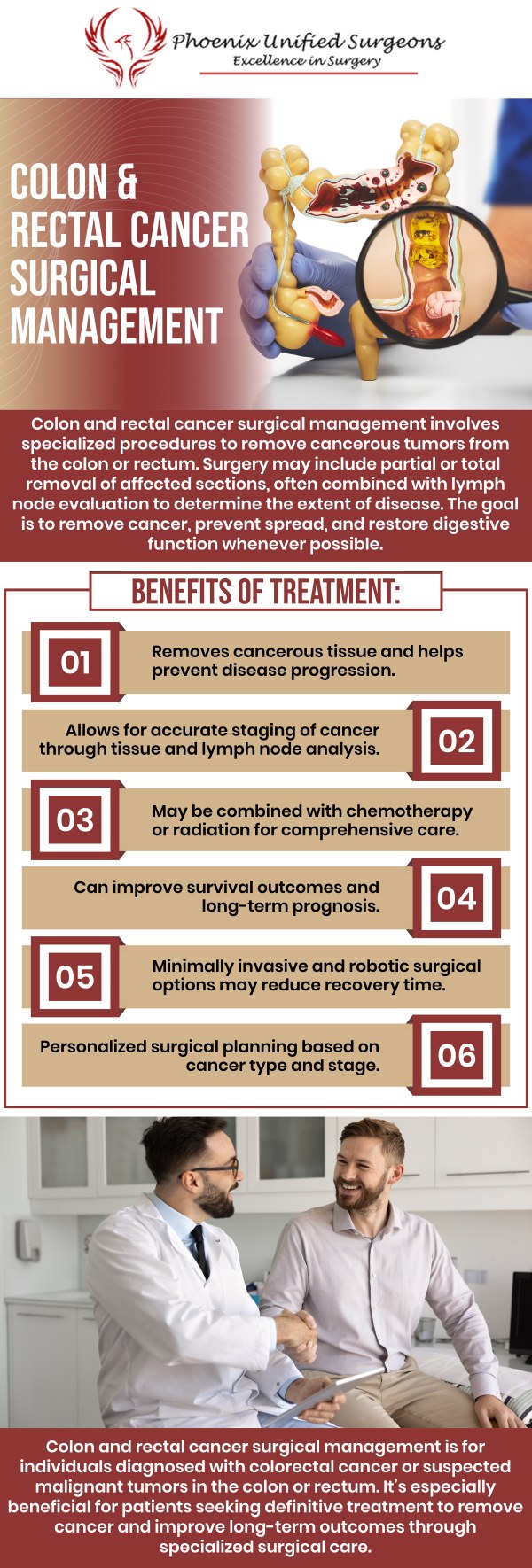
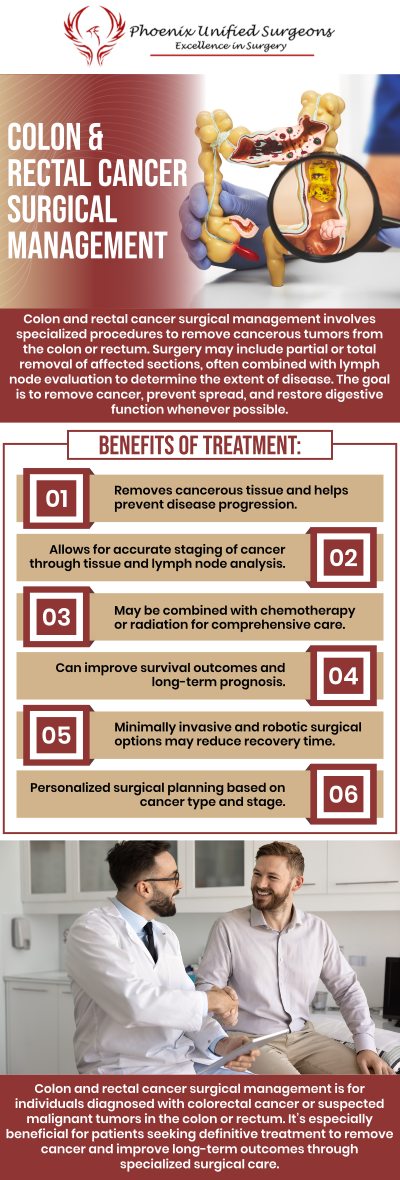
Table of Contents:
When is surgery recommended for colon or rectal cancer?
What types of surgery are used to treat colon and rectal cancer?
How should patients prepare for colon or rectal cancer surgery?
What is recovery like after colon and rectal cancer surgery?
How Can Dr. Debora Fox-McClary and the Phoenix Unified Team Support Your Colon Cancer Journey?
At Phoenix Unified Surgeons, our experienced surgical team specializes in providing advanced, individualized care for patients with colon and rectal cancer. Surgery is often the cornerstone of treatment when the tumor is localized and can be safely removed, offering the best chance for cure or long-term control.
For most patients with stage I, II, or III colon cancer, our surgeons typically recommend removing the cancerous section of the colon along with nearby lymph nodes. This approach is standard when the disease has not spread to distant organs. Even in cases where cancer has reached nearby organs or has spread in a limited way to the liver or lungs, our team may consider surgery if all visible disease can be safely removed, sometimes in combination with other therapies.
In rectal cancer, our recommendations are tailored to each individual. For early-stage tumors confined to the inner layers of the rectal wall, surgery alone may be sufficient. For more advanced rectal cancers, we often work closely with our oncology and radiation partners to combine surgery with chemotherapy and/or radiation therapy, either before or after the operation, to maximize outcomes and reduce the risk of recurrence. In addition, our surgeons may recommend procedures to relieve symptoms such as bowel obstruction or bleeding, even when cure is not possible, in order to improve quality of life.
At Phoenix Unified Surgeons, we are committed to providing comprehensive, individualized surgical care for patients diagnosed with colon and rectal cancer. Our experienced team specializes in the latest surgical techniques, ensuring each patient receives the most appropriate and effective treatment for their specific diagnosis.
Colon Cancer Surgery
The most common surgical procedure we perform for colon cancer is a colectomy. During this operation, our surgeons remove the section of the colon containing the tumor, along with nearby lymph nodes, to help ensure all cancerous tissue is excised. The healthy portions of the colon are then reconnected. In cases where the cancer is confined to a smaller area, a partial colectomy may be suitable, offering a less extensive approach with a focus on preserving as much healthy tissue as possible.
Rectal Cancer Surgery
For patients with rectal cancer, Phoenix Unified Surgeons offers several surgical options, tailored to the stage and location of the tumor. Local excision is available for very early-stage cancers, involving removal of the tumor and a small margin of surrounding tissue. For more advanced cases, a low anterior resection allows us to remove the affected rectal segment while reconnecting the colon to the remaining rectum, helping to maintain normal bowel function. If the tumor is located very low in the rectum or involves the sphincter muscles, an abdominoperineal resection may be necessary. In this procedure, the rectum, anus, and adjacent tissues are removed and a permanent colostomy is created, allowing waste to leave the body safely.
Advanced Minimally Invasive Techniques
Our practice is proud to offer minimally invasive surgical options, including laparoscopic and robotic-assisted procedures. These techniques provide patients with benefits such as smaller incisions, less pain, shorter hospital stays, and faster recovery times compared to traditional open surgery.
At Phoenix Unified Surgeons, we strive to provide the safest and most effective care for our patients undergoing colon or rectal cancer surgery. To ensure the best possible outcome and smoothest recovery, preparation is essential. Here are important steps to help you get ready for your procedure:
Consultation and Communication
Begin by having detailed discussions with your Phoenix Unified Surgeons care team. Our surgical and oncology specialists will review the specifics of your operation, expected pre- and post-operative care, and answer any questions you may have. Please let us know about all medications, supplements, and allergies. Some medicines—like blood thinners or certain diabetes medications—may need to be adjusted or temporarily stopped for your safety.
Diet and Bowel Preparation
Your surgeon at Phoenix Unified Surgeons will provide specific dietary instructions. Most patients are asked to follow a clear liquid diet for one to two days before surgery. In some cases, you may also be given a prescribed bowel prep, which can include laxatives or enemas, to empty your intestines and reduce infection risk. Carefully following these directions is essential for your safety during surgery.
Lifestyle Adjustments
If you smoke, we strongly encourage you to stop prior to surgery, as smoking can slow healing and increase complication risk. Please discuss your alcohol use with our team, since alcohol can affect anesthesia and your recovery. Gentle physical activity, as recommended by your Phoenix Unified Surgeons provider, may also help improve your surgical outcome and speed up your recovery.
Planning for Support
After your procedure at Phoenix Unified Surgeons, you may need assistance at home during the first few days or weeks. Arrange for help with transportation, meals, and daily activities in advance to ensure you can focus on healing.
Preoperative Testing and Instructions
Complete any required preoperative tests—such as blood work, imaging, or cardiac assessments—as instructed by our office. Be sure to follow all pre-surgery instructions regarding fasting, hygiene, and medications on the day before and the day of your procedure.
At Phoenix Unified Surgeons, we understand that recovery after colon and rectal cancer surgery is a gradual and highly individual process. Your healing journey will depend on the type and extent of your procedure, as well as your overall health. Our experienced surgical team is dedicated to providing comprehensive care and support every step of the way.
Hospital Stay and Immediate Post-Operative Care
After your surgery, you will be closely monitored in the hospital by our skilled staff. Pain management, infection prevention, and careful observation of your bowel function are top priorities for our team. If a portion of your colon or rectum is removed, you may require a temporary or permanent stoma. Our surgeons and specialized nurses will provide thorough education and support in stoma care and management.
Diet and Activity
To support your recovery, you will start with fluids and gradually transition back to solid foods as your digestive system heals. It’s normal to experience fatigue, discomfort at the incision site, and changes in bowel habits such as diarrhea, constipation, or urgency. Our team will guide you through wound care and help you manage any adjustments in your daily routine.
At-Home Recovery
Once you return home, it’s important to avoid heavy lifting and strenuous activities for several weeks. We encourage light activity, like walking, to help prevent blood clots and support healing. Your Phoenix Unified Surgeons care team will schedule follow-up visits to monitor your progress, address any concerns, and discuss additional treatments if needed—such as chemotherapy or radiation therapy.
Support and Ongoing Care
We recognize that adjusting to changes in body function or appearance can be challenging. Our surgeons and supportive staff are here to provide guidance, answer your questions, and connect you with emotional support resources if needed. Most patients gradually return to their normal activities, though some long-term changes in bowel habits or lifestyle may persist.
Facing a colon or rectal cancer diagnosis is overwhelming, but having a highly skilled surgical team by your side makes all the difference. At Phoenix Unified Surgeons in Phoenix, AZ, board-certified experts like Dr. Debora Fox-McClary, Dr. Brian Brizendine, and Dr. Antonino Cammarata deliver compassionate, patient-centered care.
This veteran- and female-owned practice specializes in advanced colon and rectal cancer surgical management. Whether your treatment plan requires minimally invasive robotic surgery, colon resection, or complex colon repair, the team relies on cutting-edge surgical technology to ensure a fast recovery and safe, effective results. With a strong focus on clear communication and coordinated care, these experienced surgeons will confidently guide you through every step of your surgical journey toward the best possible outcome.
Your recovery is our priority at Phoenix Unified Surgeons. We are committed to providing compassionate, expert care to help you achieve the best possible outcome after colon and rectal cancer surgery. For more information, contact us or request an appointment online. We are conveniently located at 20333 N 19th Avenue, Ste 230 Phoenix, AZ 85027. We serve patients from Phoenix AZ, Sun City AZ, Peoria AZ, Surprise AZ, Glendale AZ, Scottsdale AZ, and surrounding areas.
Check Out Our 5 Star Reviews



Additional Services You May Need
▸ Colon & Rectal Surgery
▸ Gallbladder Surgery
▸ Colonoscopy
▸ Wound Care
▸ Hernia Repair
▸ General Surgery
▸ Robotic and Minimally Invasive Surgery
▸ Appendectomy
▸ Colon Repair/Resection
▸ Lipoma & Cyst Removal
▸ Endoscopy and Colonoscopy
▸ Abdominal Pain
▸ Colon surgery for Diverticulitis
▸ Colon surgery for Colon Cancer
▸ Hemorrhoids
▸ Anal Fistulas
▸ Anal Pain Surgeries
▸ Colostomy Avoidance Surgery
▸ Fecal Incontinence Surgery
▸ Crohn’s Surgery
▸ Ulcerative Colitis Surgery
▸ TIF Procedure
▸ Colon Fistulas
▸ Groin Hernia
▸ Inguinal Hernias
▸ Hiatal Hernia
▸ Colon-Bladder Fistulas
▸ Colon Diverticulitis
▸ Hiatal Hernia Surgeon
▸ Gastroesophageal Reflux Disease
▸ Colon and Rectal Cancer Surgical Management
▸ Incisional Hernia
▸ Giant Hernias
▸ Skin Cancer
▸ Breast Cancer Screening
▸ Open and Nonhealing Wounds
▸ Incisionless Hiatal Hernia Repair
▸ Lipomas and Common Skin Growths
▸ Surgical Second Opinions
▸ Feeding Tube Access Including PEGs and G Tubes
▸ Upper GI Endoscopy Care
▸ Board-Certified General Surgeons, Colon and Rectal Surgeons
▸ Colon and Rectal Surgeon vs. Gastroenterologist
▸ Colon-Vaginal Fistulas
▸ Port Placements for IV Access
▸ Colostomy Reversal
▸ Abdominal Wall Hernia


 Send Text
 How May I Help You?