


Is Colon Cancer Curable?
At Phoenix Unified Surgeons, Dr. Antonino S. Cammarata emphasizes that colon cancer is often highly curable, especially when detected early. He specializes in advanced surgical interventions that focus on complete tumor removal while preserving as much healthy tissue as possible. By leveraging state-of-the-art diagnostic tools and personalized surgical plans, Dr. Cammarata and our team work to ensure that patients move beyond their diagnosis toward a cancer-free future. Please contact us or book your appointment online. Our office is conveniently located at 20333 N 19th Avenue, Ste 230 Phoenix, AZ 85027.
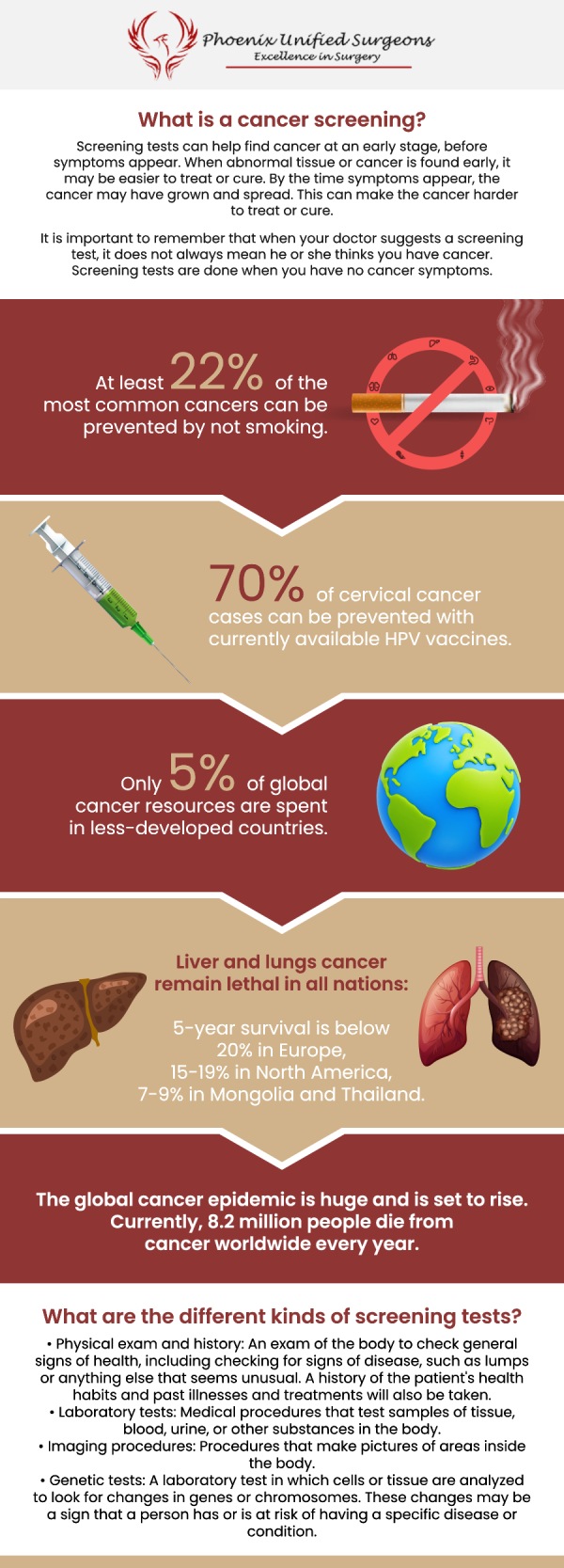
Table of Contents:
How does colon cancer treatment vary by stage?
Can surgery treat early-stage colon cancer?
What symptoms may suggest the need for a colonoscopy?
What affects life expectancy after colon cancer treatment?
How Can Phoenix Unified Surgeons Help You Overcome Colon Cancer?
At Phoenix Unified Surgeons, our approach to colon cancer treatment is personalized and based on the stage of disease at diagnosis, ensuring that each patient receives the most effective, evidence-based care.
• Early-Stage Colon Cancer (Stage 0 and I): For patients diagnosed at the earliest stage (stage 0 or carcinoma in situ), our surgeons can often remove abnormal cells during a colonoscopy, avoiding the need for more extensive surgery or additional therapy. For stage I colon cancer, where the tumor has grown into the deeper layers of the colon wall but has not spread, our surgical team typically performs a minimally invasive resection of the affected colon segment. Most patients at this stage do not require chemotherapy or radiation, and our focus remains on a swift recovery and return to normal life.
• Stage II Colon Cancer: When colon cancer advances to stage II, the tumor has grown through the wall of the colon but has not reached the lymph nodes. At Phoenix Unified Surgeons, our board-certified surgeons perform precise removal of the tumor along with nearby lymph nodes. For higher-risk cases—such as tumors invading nearby organs or those with aggressive features—our team collaborates closely with oncology specialists to determine if additional treatments like adjuvant chemotherapy are needed to reduce the risk of recurrence.
• Stage III Colon Cancer: Stage III colon cancer means the disease has spread to nearby lymph nodes. Our multidisciplinary approach combines advanced surgical techniques with coordination of post-surgical care, including adjuvant chemotherapy. This comprehensive strategy addresses microscopic cancer cells that might remain and is proven to lower recurrence rates, providing our patients with the best possible chance for long-term survival.
• Stage IV Colon Cancer: For patients with stage IV colon cancer, where the cancer has spread to distant organs, Phoenix Unified Surgeons works as part of a collaborative care team to develop individualized treatment plans. This may include surgery to remove isolated metastases, symptom-relieving procedures, or partnering with medical oncologists for systemic therapies such as chemotherapy, targeted agents, and immunotherapy. In select cases, our surgeons may offer combined operations to remove both the primary tumor and limited metastases, aiming to improve quality of life or pursue curative outcomes where possible.
• Patient-Centered Care: At every stage, our team tailors treatment to each patient’s specific needs, considering overall health, tumor characteristics, and personal preferences. Our goal is to provide the highest standard of surgical expertise, compassionate support, and coordinated care—whether the focus is on cure, long-term control, or quality of life.
For individuals diagnosed with early-stage colon cancer—when the cancer is still confined to the inner layers of the colon—surgery remains the primary and most effective treatment option. In these cases, our skilled surgeons perform a procedure known as a colectomy, where the portion of the colon containing the tumor, along with a margin of healthy tissue and nearby lymph nodes, is carefully removed. If the cancer is detected at a very early stage, such as when it appears as a small polyp, our team may be able to remove it completely during a colonoscopy, potentially avoiding the need for more extensive surgery.
The surgical team at Phoenix Unified Surgeons is committed to achieving the best possible outcomes for our patients. Surgery for early-stage colon cancer has a high success rate, and in many instances, can lead to a cure. After removal of the tumor, our surgeons typically reconnect the healthy sections of the colon to help restore normal bowel function. Your recovery and long-term outlook will depend on several factors, including your overall health and the specific stage and location of your cancer. In some cases, additional treatments such as chemotherapy may be recommended to reduce the risk of recurrence. Our multidisciplinary team will work closely with you to develop a personalized care plan tailored to your needs.
We also emphasize the importance of early detection. Regular colon cancer screenings are vital, especially for individuals over the age of 45 or those with increased risk factors. Early diagnosis can significantly improve the chances of successful treatment with surgery.
At Phoenix Unified Surgeons, our experienced team is dedicated to providing comprehensive care—including advanced diagnostic procedures like colonoscopy—to help you maintain optimal digestive health.
A colonoscopy is a vital procedure used to examine the inner lining of your large intestine for any abnormalities. There are several symptoms and risk factors that may indicate the need for this examination:
• Rectal bleeding: Blood in the stool or on toilet tissue is one of the most common reasons patients are referred to our practice for a colonoscopy.
• Persistent changes in bowel habits: Ongoing diarrhea, constipation, or noticeable changes in stool consistency can be warning signs that warrant further evaluation.
• Unexplained abdominal pain or cramping: If you’re experiencing discomfort that doesn’t resolve on its own, our surgeons may recommend a colonoscopy to investigate further.
• Unexplained weight loss or a sensation: That your bowel does not empty completely after a bowel movement are additional symptoms that should not be ignored.
• Iron deficiency anemia: If you have anemia without a clear cause—especially if you also feel fatigued or weak—it could be related to chronic blood loss from the colon.
Certain risk factors also increase the likelihood that a colonoscopy will be recommended by our specialists, even if you are not experiencing symptoms:
• Family history of colon cancer or polyps
• Personal history of inflammatory bowel disease (IBD)
Life expectancy after colon cancer treatment is influenced by many factors unique to each patient. One of the most significant determinants is the stage of colon cancer at the time of diagnosis. Early detection and intervention—key priorities in our practice—can greatly improve outcomes, as individuals diagnosed at an early stage generally have a more favorable prognosis compared to those with advanced or metastatic disease.
Our experienced surgical team specializes in advanced, minimally invasive, and traditional surgical techniques for colon cancer. The type of treatment you receive—whether surgery, chemotherapy, or radiation—and your response to these therapies play a crucial role in long-term survival. At Phoenix Unified Surgeons, we work closely with a multidisciplinary team, ensuring that every patient receives a personalized treatment plan tailored to their specific cancer type, stage, and overall health.
We also consider other important factors such as existing health conditions (comorbidities), age, and the genetic makeup of the tumor, which can influence prognosis and guide the use of advanced targeted therapies. Our practice is committed to comprehensive care, including genetic counseling and testing when appropriate, to optimize your treatment options.
Lifestyle choices after treatment matter, too. Our team provides guidance on maintaining a healthy diet, staying physically active, and avoiding tobacco or excessive alcohol use, all of which can contribute to improved survival. Phoenix Unified Surgeons emphasizes the importance of regular follow-up care to monitor for recurrence and manage any side effects, supporting you every step of the way.
At Phoenix Unified Surgeons, we believe that early intervention and specialized surgical expertise are the keys to successful recovery. Our team of board-certified specialists, including Dr. J. Brian Brizendine, Dr. Debora Fox-McClary, and Dr. Antonino S. Cammarata, provides a comprehensive approach to colon cancer treatment.
We utilize the latest in surgical technology, offering advanced procedures such as robotic and minimally invasive surgery, colon repair, and resection. By focusing on precision and “colostomy avoidance surgery,” our surgeons aim to preserve patient quality of life while effectively removing malignant tissue. Whether you require a diagnostic colonoscopy or complex tumor removal, Phoenix Unified Surgeons delivers compassionate, patient-centered care designed for fast recovery and optimal long-term outcomes.
Life expectancy after colon cancer treatment is shaped by a combination of cancer-specific characteristics, your overall health, your response to treatment, lifestyle factors, and the quality of ongoing medical care. At Phoenix Unified Surgeons, our mission is to provide the highest standard of surgical care, helping you achieve the best possible outcome on your journey to recovery. Please contact us or book your appointment online. Our office is conveniently located at 20333 N 19th Avenue, Ste 230 Phoenix, AZ 85027. We serve patients from Phoenix AZ, Sun City AZ, Peoria AZ, Surprise AZ, Glendale AZ, Scottsdale AZ, and surrounding areas.
Check Out Our 5 Star Reviews



Additional Services You May Need
▸ Colon & Rectal Surgery
▸ Gallbladder Surgery
▸ Colonoscopy
▸ Wound Care
▸ Hernia Repair
▸ General Surgery
▸ Robotic and Minimally Invasive Surgery
▸ Appendectomy
▸ Colon Repair/Resection
▸ Lipoma & Cyst Removal
▸ Endoscopy and Colonoscopy
▸ Abdominal Pain
▸ Colon surgery for Diverticulitis
▸ Colon surgery for Colon Cancer
▸ Hemorrhoids
▸ Anal Fistulas
▸ Anal Pain Surgeries
▸ Colostomy Avoidance Surgery
▸ Fecal Incontinence Surgery
▸ Crohn’s Surgery
▸ Ulcerative Colitis Surgery
▸ TIF Procedure
▸ Colon Fistulas
▸ Groin Hernia
▸ Inguinal Hernias
▸ Hiatal Hernia
▸ Colon-Bladder Fistulas
▸ Colon Diverticulitis
▸ Hiatal Hernia Surgeon
▸ Gastroesophageal Reflux Disease
▸ Colon and Rectal Cancer Surgical Management
▸ Incisional Hernia
▸ Giant Hernias
▸ Skin Cancer
▸ Breast Cancer Screening
▸ Open and Nonhealing Wounds
▸ Incisionless Hiatal Hernia Repair
▸ Lipomas and Common Skin Growths
▸ Surgical Second Opinions
▸ Feeding Tube Access Including PEGs and G Tubes
▸ Upper GI Endoscopy Care
▸ Board-Certified General Surgeons, Colon and Rectal Surgeons
▸ Colon and Rectal Surgeon vs. Gastroenterologist
▸ Colon-Vaginal Fistulas
▸ Port Placements for IV Access
▸ Colostomy Reversal
▸ Abdominal Wall Hernia


 Send Text
 How May I Help You?