


How Long Does It Take for Diverticulitis Treatment to Work?
The effectiveness of diverticulitis treatment can vary depending on the severity of the condition and the type of treatment prescribed. For mild cases, antibiotics and dietary changes may show improvement within a few days, while more severe cases requiring hospitalization or surgery may take longer to heal. Our team at Phoenix Unified Surgeons works closely with patients to monitor progress and adjust treatment plans to ensure the best possible outcome, guiding you toward a full recovery. Please contact us or book your appointment online. Our office is conveniently located at 20333 N 19th Avenue, Ste 230 Phoenix, AZ 85027.
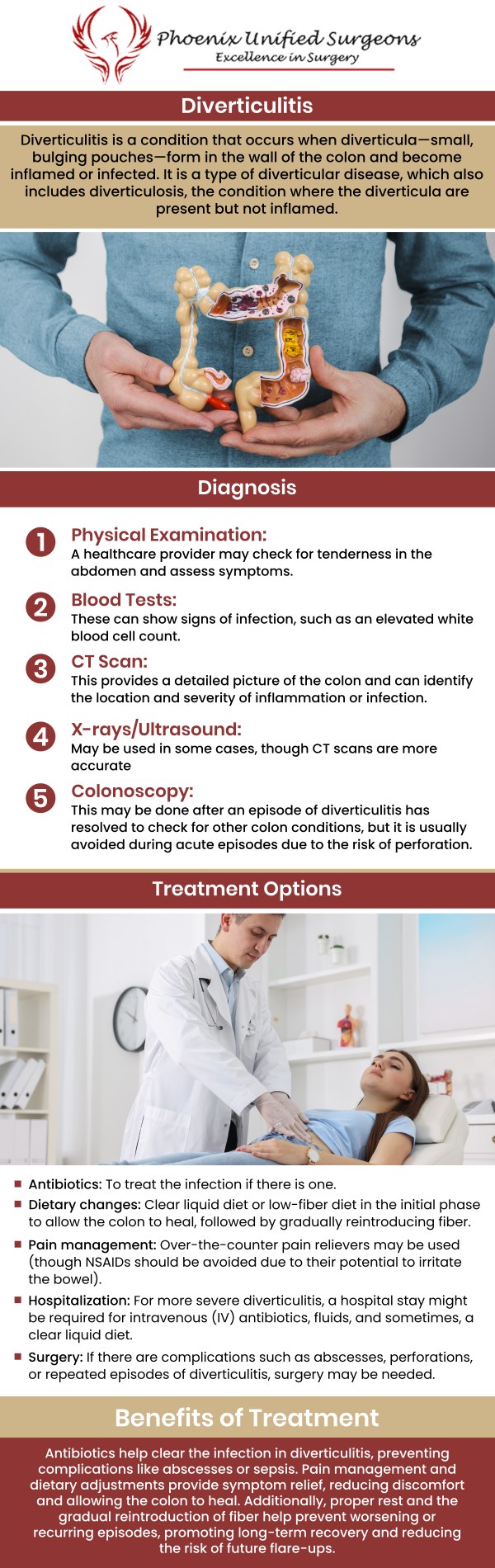
Table of Contents:
When can you expect to see improvement after starting treatment for diverticulitis?
What factors influence how quickly diverticulitis treatment works?
Can diverticulitis treatment provide immediate relief, or does it take time?
If diverticulitis symptoms don’t improve, how long should you wait before seeking further treatment?
Dr. Antonino Cammarata, D.O., Discusses the Timeframe for Diverticulitis Treatment to Take Effect
At Phoenix Unified Surgeons, our team is dedicated to providing professional care for patients diagnosed with diverticulitis. After beginning treatment for diverticulitis, many of our patients notice an improvement in their symptoms within two to three days. The exact timeline will depend on the severity of your condition and the specific treatment plan we design for you.
For mild cases, which we often manage with oral antibiotics and dietary modifications, symptoms such as abdominal pain, fever, and changes in bowel habits typically begin to improve within 48 to 72 hours. If your diverticulitis is more severe and requires hospital care or intravenous antibiotics, you can still expect symptom relief within a few days, though full recovery may take a bit longer.
It is very important to complete your full course of antibiotics and to follow the recommendations of your Phoenix Unified Surgeons care team regarding diet, activity, and follow-up appointments. If you do not experience improvement after three days of treatment, or if your symptoms worsen at any time, please contact our office immediately. This may indicate complications or the need to adjust your treatment.
The timeline for recovery depends on several individual factors, and our team is committed to providing a personalized treatment plan that promotes the fastest and safest recovery possible.
• Severity of Diverticulitis: The extent of your diverticulitis plays a significant role in how quickly treatment works. Mild cases—where inflammation is limited—often respond rapidly to antibiotics and dietary modifications, with noticeable improvement in just a few days. However, severe episodes, especially those complicated by abscesses or perforation, may necessitate hospitalization or surgery. In these situations, recovery can take longer, but our experienced surgeons are equipped with advanced techniques to manage even the most complex cases efficiently.
• Your Overall Health: Your overall health and immune status also affect recovery speed. Patients with a strong immune system and few underlying issues tend to recover more quickly, while those with additional health concerns may require a more tailored and gradual approach.
• The importance of Early Intervention: Timely treatment is crucial. Our team encourages patients to seek evaluation at the first sign of symptoms like abdominal pain or changes in bowel habits. Early intervention helps us begin treatment before complications arise, often resulting in a faster and smoother recovery process.
• Treatment Approach: We offer a range of treatment options, from outpatient management with oral antibiotics and dietary guidance to advanced surgical interventions for more severe cases. Outpatient care can often lead to a quicker return to normal activities, while more intensive treatments may extend the recovery period.
• Addressing Underlying Gastrointestinal Issues: Underlying issues such as chronic constipation or irritable bowel syndrome can impact recovery time. We take a comprehensive approach by addressing these factors alongside your diverticulitis treatment, helping to promote a faster and more complete recovery.
Diverticulitis treatment does not typically provide immediate relief, as the healing process requires time and careful management. Our goal is to reduce inflammation, address any infection, and support the healing of your colon.
For patients with mild diverticulitis, our surgeons may recommend rest, a clear liquid diet, and oral antibiotics. While symptoms such as abdominal pain, bloating, and tenderness often begin to improve within a few days of starting treatment, full recovery generally takes about a week or longer. Our providers will closely monitor your progress and adjust your treatment plan as needed to ensure optimal healing.
In more severe cases, our team may recommend hospitalization, where you can receive intravenous antibiotics and fluids under close medical supervision. Even with aggressive treatment, symptom relief is usually gradual, and it is normal for pain and discomfort to persist for several days before significant improvement is noticed. Pain medications may be prescribed to help manage discomfort during your recovery, though it is important to note these medications do not treat the underlying inflammation.
If you are experiencing symptoms of diverticulitis—such as abdominal pain (often on the lower left side), fever, nausea, or changes in bowel habits—it is important to monitor your condition closely.
For mild cases, diverticulitis can often be managed at home with rest, a clear liquid diet, and antibiotics if prescribed by your healthcare provider. However, if your symptoms do not begin to improve within 48 to 72 hours after starting treatment, or if your condition worsens, we urge you to contact Phoenix Unified Surgeons for further evaluation.
Additionally, if you develop severe abdominal pain, persistent vomiting, high fever, rectal bleeding, or signs of peritonitis (such as a rigid abdomen or inability to pass stool or gas), seek emergency medical care immediately. Prompt assessment and intervention are crucial, as complications like abscesses, perforation, or peritonitis can be life-threatening and may require urgent surgical treatment.
The course of treatment and the expected timeline for improvement largely depend on the severity of the condition and the patient’s individual needs.
For most mild, uncomplicated cases of diverticulitis, Dr. Antonino, MD at Phoenix Unified Surgeons will typically prescribe oral antibiotics. Patients often notice improvement in symptoms—such as abdominal pain, fever, and digestive disturbances—within two to three days of starting medication. It is important, however, to complete the entire prescribed course of antibiotics, which usually lasts seven to ten days, even if symptoms resolve sooner.
In more severe or complicated cases, including those with abscess formation, perforation, or a significant infection, our team may recommend hospitalization for intravenous antibiotics and close monitoring. In these situations, patients may begin to see some improvement within 48 to 72 hours, but full recovery can take a week or longer. Additional treatments, such as abscess drainage or surgical intervention, may be necessary, and the surgeons at Phoenix Unified Surgeons are highly experienced in performing these advanced procedures when needed. Please contact us or book your appointment online. Our office is conveniently located at 20333 N 19th Avenue, Ste 230 Phoenix, AZ 85027.
Check Out Our 5 Star Reviews



Additional Services You May Need
▸ Colon & Rectal Surgery
▸ Gallbladder Surgery
▸ Colonoscopy
▸ Wound Care
▸ Hernia Repair
▸ General Surgery
▸ Robotic and Minimally Invasive Surgery
▸ Appendectomy
▸ Colon Repair/Resection
▸ Lipoma & Cyst Removal
▸ Endoscopy and Colonoscopy
▸ Abdominal Pain
▸ Colon surgery for Diverticulitis
▸ Colon surgery for Colon Cancer
▸ Hemorrhoids
▸ Anal Fistulas
▸ Anal Pain Surgeries
▸ Colostomy Avoidance Surgery
▸ Fecal Incontinence Surgery
▸ Crohn’s Surgery
▸ Ulcerative Colitis Surgery
▸ TIF Procedure
▸ Colon Fistulas
▸ Groin Hernia
▸ Inguinal Hernias
▸ Hiatal Hernia
▸ Colon-Bladder Fistulas
▸ Colon Diverticulitis
▸ Hiatal Hernia Surgeon
▸ Gastroesophageal Reflux Disease
▸ Colon and Rectal Cancer Surgical Management
▸ Incisional Hernia
▸ Giant Hernias
▸ Skin Cancer
▸ Breast Cancer Screening
▸ Open and Nonhealing Wounds
▸ Incisionless Hiatal Hernia Repair
▸ Lipomas and Common Skin Growths
▸ Surgical Second Opinions
▸ Feeding Tube Access Including PEGs and G Tubes
▸ Upper GI Endoscopy Care
▸ Board-Certified General Surgeons, Colon and Rectal Surgeons
▸ Colon and Rectal Surgeon vs. Gastroenterologist
▸ Colon-Vaginal Fistulas
▸ Port Placements for IV Access
▸ Colostomy Reversal
▸ Abdominal Wall Hernia


 Send Text
 How May I Help You?