


When Do Diverticulitis Symptoms Become an Emergency?
Diverticulitis symptoms can become an emergency if they worsen or indicate serious complications. Sudden, severe abdominal pain, high fever, chills, rapid heartbeat, or blood in the stool may signal a perforation, infection, or bowel obstruction, requiring immediate medical attention. At Phoenix Unified Surgeons, our team is ready to provide urgent care, performing rapid evaluations and offering surgical interventions when necessary to prevent life-threatening complications. Please contact us or book your appointment online. Our office is conveniently located at 20333 N 19th Avenue, Ste 230 Phoenix, AZ 85027.
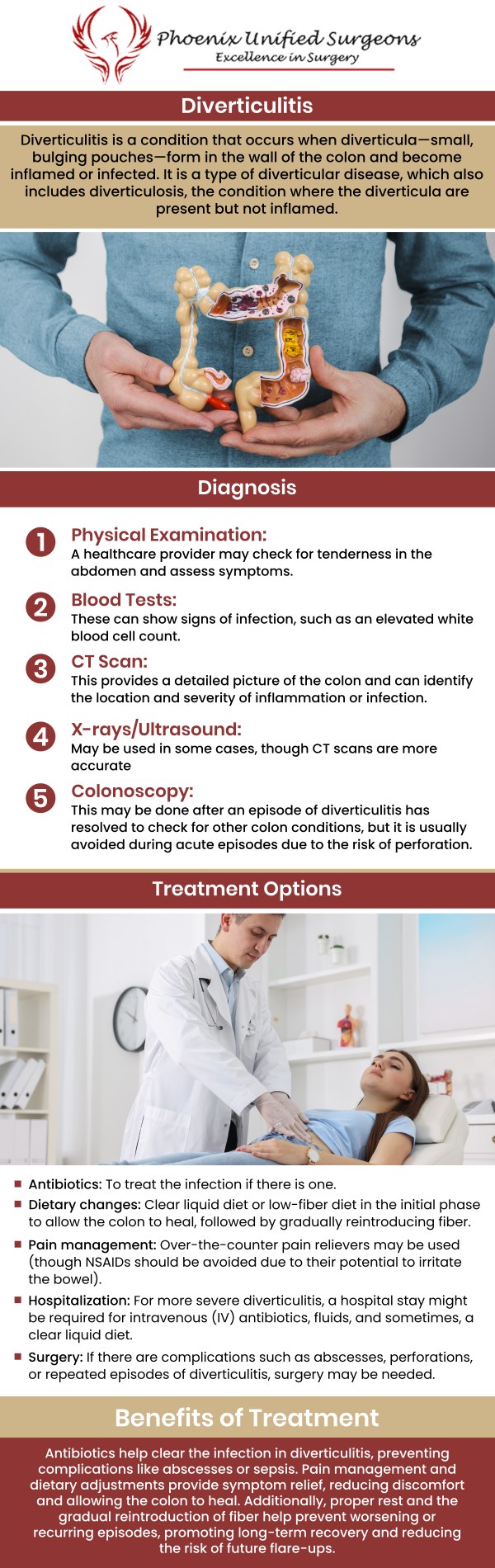
Table of Contents:
What are the key warning signs that a diverticulitis flare-up has become an emergency?
Is a high fever and chills a sign of a serious diverticulitis infection or abscess?
What complications of diverticulitis require emergency treatment?
How do doctors assess whether diverticulitis symptoms are life-threatening?
What to Watch for in Diverticulitis Symptoms: Dr. Antonino Cammarata, D.O. Explains Emergency Indicators
At Phoenix Unified Surgeons, our team is dedicated to providing compassionate care for patients experiencing gastrointestinal conditions, including diverticulitis. While mild cases can often be managed with medication and dietary changes, severe diverticulitis can quickly escalate to a medical emergency. Recognizing the warning signs is crucial for your health and safety.
If you have a history of diverticulitis or are experiencing symptoms for the first time, it’s vital to be alert for the following emergency signs:
• Severe, Sudden Abdominal Pain: If you experience a rapid onset of intense pain—especially if it’s much worse than previous episodes—or if your abdomen becomes hard, rigid, or extremely tender, this could indicate a perforation or widespread infection in the colon.
• High Fever and Chills: A significant fever accompanied by chills may signal that an abscess has formed or that the infection is spreading into your bloodstream (sepsis).
• Persistent Nausea and Vomiting: Inability to keep down fluids or medications can rapidly lead to dehydration and suggests more serious intestinal involvement.
• Inability to Pass Stool or Gas: Complete constipation or difficulty passing gas can be a sign of bowel obstruction, which is a serious complication requiring prompt intervention.
• Heavy Rectal Bleeding: Noticeable or severe rectal bleeding—especially if accompanied by dizziness, lightheadedness, or fainting—may be a sign of significant blood loss and requires immediate evaluation.
• Other Concerning Symptoms: Confusion, rapid heartbeat, low blood pressure, or shortness of breath can indicate that the infection is affecting other organs and your body is struggling to maintain normal function.
If you or a loved one experience any of these symptoms, do not delay—call 911 or go to the nearest emergency room. Early intervention can save lives and prevent long-term complications.
A high fever and chills can be important warning signs for anyone diagnosed with diverticulitis. While mild cases of diverticulitis can cause abdominal pain, low-grade fever, and changes in bowel habits, the development of a high fever and chills suggests that the infection may be more severe and potentially life-threatening.
High fever and chills are signals that the infection may be spreading beyond the initial site, increasing the risk of serious complications such as an abscess (a collection of pus) or peritonitis (infection throughout the abdominal cavity).
These symptoms occur as your body’s immune system responds to a significant infection. When diverticulitis progresses, bacteria can escape from the colon and lead to an abscess or more widespread infection. If left untreated, an abscess can rupture, causing severe illness and requiring emergency surgical intervention.
If you or a loved one with diverticulitis develops a high fever (over 101°F or 38.3°C) and chills, it’s crucial to seek prompt medical attention. The skilled surgeons at Phoenix Unified Surgeons will conduct a thorough evaluation, often including imaging tests such as a CT scan, to determine the presence of abscesses or other complications. Depending on the severity, treatment may range from antibiotics and abscess drainage to advanced surgical procedures.
Certain complications of diverticulitis can become life-threatening and require immediate medical intervention. One of the most serious complications is perforation of the colon, which occurs when an inflamed or infected diverticulum ruptures, allowing bacteria and intestinal contents to spill into the abdominal cavity. This can lead to peritonitis—a severe, potentially fatal infection of the abdominal lining characterized by intense pain, fever, and a rigid abdomen. Peritonitis requires emergency hospitalization and often urgent surgical intervention.
Another emergency we frequently manage is the formation of a large abscess (a pocket of pus), which can cause persistent pain, high fever, and, if the infection spreads, signs of sepsis. Some abscesses can be drained using minimally invasive techniques under imaging guidance, while others may require surgical drainage.
Diverticulitis can also lead to a blockage or obstruction of the colon, resulting in severe abdominal distension, inability to pass stool or gas, vomiting, and escalating pain.
While bleeding from a diverticulum is more common in diverticulosis than diverticulitis, severe or persistent bleeding is another situation that may require urgent intervention.
Additionally, the formation of a fistula—an abnormal connection between the colon and other organs such as the bladder or vagina—can result in symptoms like recurrent urinary tract infections or passage of air or stool through the urine.
If you experience sudden and severe abdominal pain, persistent fever, signs of shock (such as rapid heartbeat, low blood pressure, or confusion), rectal bleeding, or symptoms suggesting peritonitis, seek emergency medical care immediately. At Phoenix Unified Surgeons, we are committed to providing rapid evaluation and surgical management to help you recover safely and effectively.
At Phoenix Unified Surgeons, our experienced surgical team uses a comprehensive approach to assess and manage diverticulitis, ensuring the highest standard of care for our patients in the Phoenix community.
When patients present with symptoms of diverticulitis—such as lower abdominal pain, fever, or changes in bowel habits—our surgeons begin with a thorough evaluation of the patient’s medical history and a detailed discussion of their current symptoms. We carefully assess the severity and duration of these symptoms, as well as any previous episodes or underlying health issues that could influence treatment decisions.
A meticulous physical examination is performed to identify signs that may indicate complications, such as abdominal tenderness, rigidity, or guarding. These findings can point to serious issues like perforation or peritonitis, both of which require immediate surgical attention. Our team is highly trained to recognize signs of systemic illness—including high fever, rapid heart rate, low blood pressure, or confusion—which could suggest the presence of sepsis, a potentially life-threatening response to infection.
At Phoenix Unified Surgeons, we utilize advanced laboratory testing to support our clinical evaluation. Elevated white blood cell counts and increased inflammatory markers, like C-reactive protein, can help us determine the severity of the infection. In cases where sepsis is a concern, blood cultures may be ordered to identify the causative organism and guide targeted therapy.
Imaging, particularly abdominal and pelvic CT scans, plays a crucial role in our diagnostic process. These studies allow us to visualize the colon and surrounding tissues, helping to identify complications such as abscess formation, perforation, fistulas, or significant bowel obstruction. The detection of free air or fluid in the abdomen on imaging is particularly concerning and indicates the need for urgent surgical intervention.
Our surgeons integrate all of this information to assess the risk of life-threatening complications. While mild, uncomplicated diverticulitis can often be managed with antibiotics and close monitoring, evidence of abscess, peritonitis, sepsis, persistent pain, or other complications may necessitate hospitalization, urgent procedures, or surgery. Our team is committed to constant clinical monitoring and rapid intervention to ensure optimal outcomes for our patients.
At Phoenix Unified Surgeons, Dr. Antonino Cammarata, D.O., and our team are here to help you recognize the signs of diverticulitis. This condition occurs when pouches in your colon become inflamed or infected.
Common symptoms include lower left abdominal pain, fever, nausea, vomiting, bloating, and changes in bowel habits. However, certain signs demand urgent care: severe or spreading abdominal pain, high fever, chills, blood in stool, or an inability to pass gas. These may indicate a perforation, infection, or bowel obstruction that requires immediate surgical evaluation. Don’t wait—early intervention can prevent serious complications.
If you are managing diverticulitis and notice any sudden worsening of symptoms, don’t hesitate to contact Phoenix Unified Surgeons or visit the nearest emergency department immediately. Early recognition and treatment can make a significant difference in your recovery and long-term health. Please contact us or book your appointment online. Our office is conveniently located at 20333 N 19th Avenue, Ste 230 Phoenix, AZ 85027. We serve patients from Phoenix AZ, Sun City AZ, Peoria AZ, Surprise AZ, Glendale AZ, Scottsdale AZ, and surrounding areas.
Check Out Our 5 Star Reviews



Additional Services You May Need
▸ Colon & Rectal Surgery
▸ Gallbladder Surgery
▸ Colonoscopy
▸ Wound Care
▸ Hernia Repair
▸ General Surgery
▸ Robotic and Minimally Invasive Surgery
▸ Appendectomy
▸ Colon Repair/Resection
▸ Lipoma & Cyst Removal
▸ Endoscopy and Colonoscopy
▸ Abdominal Pain
▸ Colon surgery for Diverticulitis
▸ Colon surgery for Colon Cancer
▸ Hemorrhoids
▸ Anal Fistulas
▸ Anal Pain Surgeries
▸ Colostomy Avoidance Surgery
▸ Fecal Incontinence Surgery
▸ Crohn’s Surgery
▸ Ulcerative Colitis Surgery
▸ TIF Procedure
▸ Colon Fistulas
▸ Groin Hernia
▸ Inguinal Hernias
▸ Hiatal Hernia
▸ Colon-Bladder Fistulas
▸ Colon Diverticulitis
▸ Hiatal Hernia Surgeon
▸ Gastroesophageal Reflux Disease
▸ Colon and Rectal Cancer Surgical Management
▸ Incisional Hernia
▸ Giant Hernias
▸ Skin Cancer
▸ Breast Cancer Screening
▸ Open and Nonhealing Wounds
▸ Incisionless Hiatal Hernia Repair
▸ Lipomas and Common Skin Growths
▸ Surgical Second Opinions
▸ Feeding Tube Access Including PEGs and G Tubes
▸ Upper GI Endoscopy Care
▸ Board-Certified General Surgeons, Colon and Rectal Surgeons
▸ Colon and Rectal Surgeon vs. Gastroenterologist
▸ Colon-Vaginal Fistulas
▸ Port Placements for IV Access
▸ Colostomy Reversal
▸ Abdominal Wall Hernia


 Send Text
 How May I Help You?