


Is Your Diet the Main Cause of Your Diverticulitis Flare-Up?
Diet plays a significant role in managing diverticulitis flare-ups. Certain foods can irritate the digestive system and trigger inflammation in the colon. While a high-fiber diet is generally recommended for preventing flare-ups, foods rich in seeds, nuts, and processed items may exacerbate symptoms. Our surgeons at Phoenix Unified Surgeons can help you understand which foods to avoid and how to modify your diet, reducing the frequency and severity of diverticulitis flare-ups and supporting better long-term gut health. Please contact us or book your appointment online. Our office is conveniently located at 20333 N 19th Avenue, Ste 230 Phoenix, AZ 85027.
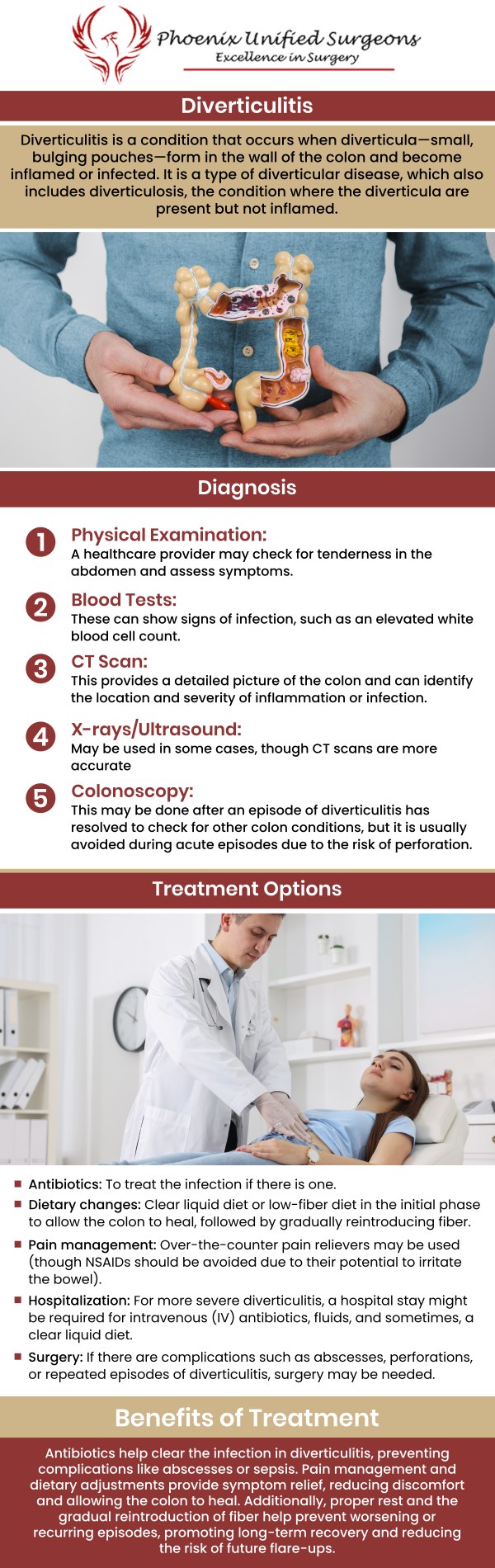
Table of Contents:
Can your diet trigger a flare-up of diverticulitis?
What dietary factors contribute to diverticulitis flare-ups?
How do your eating habits affect the risk of a diverticulitis flare-up?
Are there specific foods that can cause a diverticulitis flare-up?
Can changes in diet help prevent future diverticulitis flare-ups?
Could Your Diet Be Triggering Diverticulitis? Dr. Antonino Cammarata, D.O. Offers Insights
At Phoenix Unified Surgeons, we understand that managing diverticulitis is a collaborative process between you and your healthcare team. Your diet can play a significant role in both triggering and preventing flare-ups of diverticulitis. This condition occurs when small pouches (diverticula) in the wall of your colon become inflamed or infected, often causing pain and digestive symptoms.
Our surgeons frequently counsel patients that a low-fiber diet is commonly associated with an increased risk of developing diverticulitis. Without enough fiber, stool can become hard and difficult to pass, creating pressure in the colon. This pressure may lead to the formation of diverticula and increase the likelihood of inflammation or infection. During an acute flare-up, the Phoenix Unified Surgeons team may recommend a clear liquid or low-fiber diet to allow your colon to rest and heal. Once symptoms improve, we guide patients to gradually reintroduce fiber-rich foods—such as fruits, vegetables, and whole grains—to help prevent future episodes.
Many patients ask about the role of foods like nuts, seeds, or popcorn in triggering diverticulitis. Current research does not show a direct connection between these foods and flare-ups, but individual responses can vary. Other factors—such as dehydration, lack of physical activity, and obesity—also play a role in increasing diverticulitis risk.
Dietary factors play a significant role in the development and management of diverticulitis. Our surgical team sees firsthand how a long-term low-fiber diet can increase the risk of diverticulitis by contributing to constipation and increased pressure within the colon—factors that may lead to the formation of diverticula.
During a diverticulitis flare-up, patients often have questions about which foods to avoid. While traditional advice suggested steering clear of nuts, seeds, corn, and popcorn, recent studies indicate these foods may not be problematic for everyone. However, high-fat and highly processed foods are more consistently associated with increased inflammation and slowed digestion, which can worsen symptoms. Similarly, red and processed meats may elevate the risk of recurrent diverticulitis attacks.
Staying well-hydrated is also crucial, as inadequate fluid intake can exacerbate constipation and trigger flare-ups. Some patients may notice that spicy foods, dairy, or foods that cause gas and bloating increase their discomfort during an episode.
It’s important to remember that dietary triggers are not the same for everyone. At Phoenix Unified Surgeons, we recommend a balanced, high-fiber diet rich in whole grains, fruits, vegetables, and plenty of fluids to support colon health and help prevent future flare-ups. Because individual needs can vary, our surgeons work closely with patients to provide personalized dietary guidance and collaborate with registered dietitians as needed.
Research and our clinical experience show that diets low in fiber are associated with a higher risk of developing diverticulosis, which can progress to diverticulitis. When you don’t eat enough fiber, your stool becomes harder and more difficult to pass, increasing pressure inside your colon. This added pressure can lead to the formation of diverticula and may also worsen inflammation during a diverticulitis flare.
At Phoenix Unified Surgeons, we encourage our patients to consume a diet rich in fiber from fruits, vegetables, whole grains, and legumes. This not only softens and bulks up stool for easier passage but also helps lower the risk of both developing diverticula and experiencing future diverticulitis attacks. However, during an acute episode of diverticulitis, our surgeons often recommend temporarily switching to a low-fiber or clear liquid diet to allow your colon to rest and heal. Once symptoms improve, we guide you through a gradual reintroduction of fiber-rich foods, tailored to your recovery.
Our surgeons also advise minimizing consumption of red meat, processed foods, and foods high in fat, as these have been linked to an increased risk of diverticulitis. Staying hydrated is equally important. Water works synergistically with fiber to keep stools soft and promote regular bowel movements.
While previous guidelines suggested avoiding nuts, seeds, or popcorn, current evidence does not strongly support this restriction. Most patients under our care can safely include these foods unless they notice specific discomfort after eating them.
Our surgical team stays up to date with the latest evidence and recognizes that there are no universally specific foods that cause diverticulitis flare-ups for everyone. Instead, food triggers tend to vary from person to person. Some of our patients find that high-fat foods, red meat, or foods that are hard to digest can exacerbate their symptoms, while others do not notice any pattern.
During an acute diverticulitis episode, our physicians may recommend a temporary low-fiber or clear liquid diet to allow your colon to rest and heal. Once symptoms improve, we typically encourage gradually reintroducing fiber-rich foods, such as fruits, vegetables, and whole grains. A high-fiber diet has been shown to support colon health and may help prevent future episodes.
If you are living with diverticulitis, it’s important to pay attention to how your body responds to different foods and to keep track of any symptoms. We encourage you to discuss your dietary habits and concerns with our team or with a registered dietitian so we can tailor recommendations to your individual needs.
Our surgeons recommend that once you have recovered from an acute diverticulitis episode, you gradually increase your intake of dietary fiber. Fiber helps soften stool and encourages regular bowel movements, which can reduce pressure on your colon and lower the risk of new diverticula forming or existing ones becoming inflamed. Excellent sources of dietary fiber include whole grains, fruits, vegetables, and legumes. We advise you to increase fiber gradually and drink plenty of water to help your body adjust comfortably.
Maintaining a well-balanced, healthy diet is vital. Avoiding constipation is especially important, as straining during bowel movements can increase pressure in your colon. Some studies also suggest that diets high in red meat and processed foods may increase the risk of diverticulitis, so our providers often recommend limiting these foods as part of a comprehensive prevention plan.
Diverticulitis is a condition marked by inflammation or infection of small pouches (diverticula) that can form along the walls of the colon. While the exact causes of diverticulitis are not fully understood, diet is thought to play a significant role in both its development and flare-ups. The surgical specialists at Phoenix Unified Surgeons emphasize the importance of understanding how your dietary choices can impact your digestive health.
Dr. Antonino Cammarata, D.O and his team at Phoenix Unified Surgeons wants patients to know that a low-fiber diet is more strongly linked to the development of diverticular disease and its complications. Fiber helps keep stools soft and regular, reducing pressure in the colon that could contribute to the formation and inflammation of diverticula.
A diet lacking in whole grains, fruits, and vegetables may increase your risk of diverticulitis, while gradually increasing your intake of high-fiber foods can promote colon health and potentially reduce flare-ups. During an acute episode of diverticulitis, your surgeon may recommend a temporary shift to a clear liquid or low-fiber diet to allow your colon to heal, followed by a gradual return to fiber-rich foods as your symptoms improve.
While diet is a significant factor, our Phoenix Unified Surgeons team reminds patients that genetics, aging, obesity, and a sedentary lifestyle can also contribute to the risk of diverticulitis.
If you suspect your diet may be contributing to digestive discomfort or you have concerns about diverticulitis, the experienced physicians at Phoenix Unified Surgeons are here to help. To schedule a consultation or learn more about digestive health and diverticulitis management, contact Phoenix Unified Surgeons today. Our office is conveniently located at 20333 N 19th Avenue, Ste 230 Phoenix, AZ 85027. We serve patients from Phoenix AZ, Sun City AZ, Peoria AZ, Surprise AZ, Glendale AZ, Scottsdale AZ, and surrounding areas.
Check Out Our 5 Star Reviews



Additional Services You May Need
▸ Colon & Rectal Surgery
▸ Gallbladder Surgery
▸ Colonoscopy
▸ Wound Care
▸ Hernia Repair
▸ General Surgery
▸ Robotic and Minimally Invasive Surgery
▸ Appendectomy
▸ Colon Repair/Resection
▸ Lipoma & Cyst Removal
▸ Endoscopy and Colonoscopy
▸ Abdominal Pain
▸ Colon surgery for Diverticulitis
▸ Colon surgery for Colon Cancer
▸ Hemorrhoids
▸ Anal Fistulas
▸ Anal Pain Surgeries
▸ Colostomy Avoidance Surgery
▸ Fecal Incontinence Surgery
▸ Crohn’s Surgery
▸ Ulcerative Colitis Surgery
▸ TIF Procedure
▸ Colon Fistulas
▸ Groin Hernia
▸ Inguinal Hernias
▸ Hiatal Hernia
▸ Colon-Bladder Fistulas
▸ Colon Diverticulitis
▸ Hiatal Hernia Surgeon
▸ Gastroesophageal Reflux Disease
▸ Colon and Rectal Cancer Surgical Management
▸ Incisional Hernia
▸ Giant Hernias
▸ Skin Cancer
▸ Breast Cancer Screening
▸ Open and Nonhealing Wounds
▸ Incisionless Hiatal Hernia Repair
▸ Lipomas and Common Skin Growths
▸ Surgical Second Opinions
▸ Feeding Tube Access Including PEGs and G Tubes
▸ Upper GI Endoscopy Care
▸ Board-Certified General Surgeons, Colon and Rectal Surgeons
▸ Colon and Rectal Surgeon vs. Gastroenterologist
▸ Colon-Vaginal Fistulas
▸ Port Placements for IV Access
▸ Colostomy Reversal
▸ Abdominal Wall Hernia


 Send Text
 How May I Help You?