


Diverticulosis Vs. Diverticulitis: What’s The Difference?
Diverticulosis and diverticulitis are related conditions affecting the colon, but they differ in severity and symptoms. Diverticulosis involves small pouches in the colon, while diverticulitis occurs when these pouches become inflamed or infected. In Phoenix, AZ, Dr. Debora Fox-McClary, M.D, and Dr. J. Brian Brizendine offer personalized care to help diagnose, manage, and treat both conditions, ensuring personalized treatment for improved digestive health. For more information, contact us or book your appointment online. Our office is conveniently located at 20333 N 19th Avenue, Ste 230 Phoenix, AZ 85027.
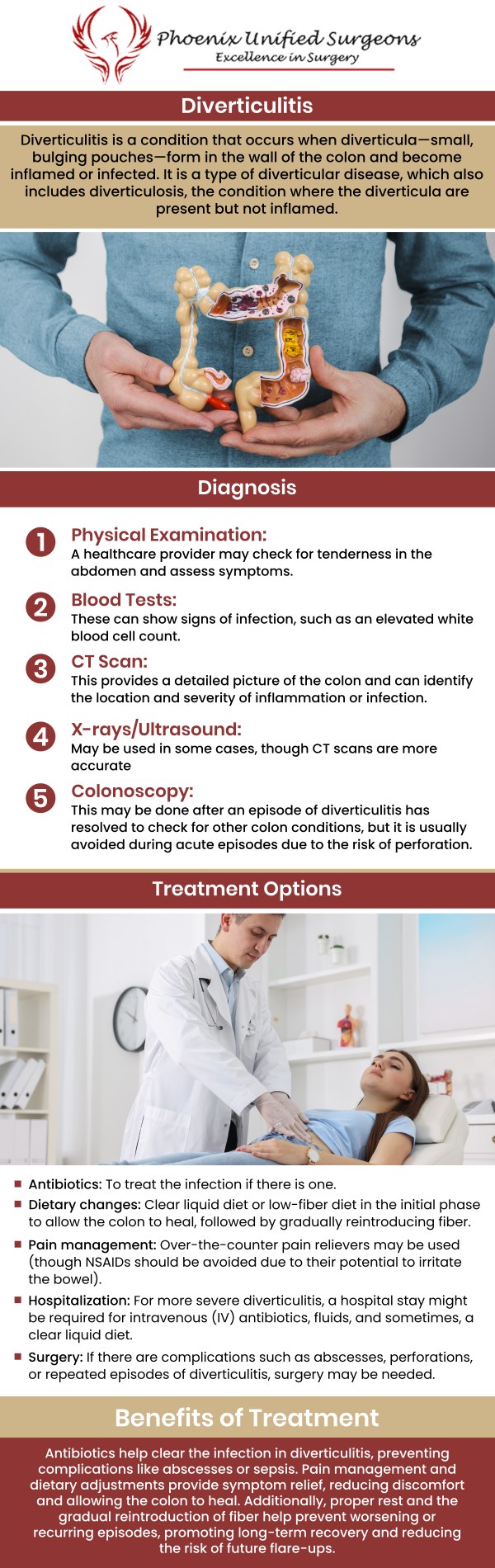
Table of Contents:
What is more serious, diverticulitis or diverticulosis?
What are the two main causes of diverticulosis?
What are the warning signs of diverticulosis?
What are the red flags for diverticulitis?
How Do Surgeons at Phoenix Unified, Such as Dr. Debora Fox-McClary, M.D., Approach Diverticulosis vs. Diverticulitis Treatment?
Diverticulosis refers to the development of small pouches, called diverticula, in the wall of the colon. Most individuals with diverticulosis do not experience symptoms, and the condition is often identified incidentally during routine screenings, such as a colonoscopy. While diverticulosis itself is generally harmless, it does indicate a structural change in the colon that can sometimes lead to complications.
Diverticulitis occurs when one or more of these diverticula become inflamed or infected. This can result in symptoms such as abdominal pain, fever, nausea, and changes in bowel habits. Diverticulitis can range from mild to severe, and in serious cases, it may cause complications such as abscesses, perforation of the colon, or peritonitis. Severe cases may require hospitalization, intravenous antibiotics, or even surgical intervention.
Our experienced surgical team is highly skilled in the diagnosis and management of both diverticulosis and diverticulitis. We offer comprehensive care, from initial evaluation and non-surgical management to advanced minimally invasive and traditional surgical procedures when necessary.
If you have been diagnosed with diverticulosis, are experiencing symptoms of diverticulitis, or have concerns about your colon health, the specialists at Phoenix Unified Surgeons are here to help. Early evaluation and care are crucial to preventing complications and ensuring the best possible outcome.
Diverticulosis is a common condition marked by the formation of small pouches, called diverticula, in the wall of the colon. At Phoenix Unified Surgeons, our team frequently diagnoses and manages diverticulosis, helping patients in the Phoenix area understand the underlying causes and treatment options for this condition.
The two primary causes of diverticulosis are related to diet and the natural aging process:
1. Low-Fiber Diet:
A diet low in fiber is a significant risk factor for developing diverticulosis. When individuals do not consume enough fruits, vegetables, or whole grains, stools tend to become harder and smaller. Passing these stools requires more effort, increasing pressure within the colon. Over time, this pressure can cause weak spots in the colon wall to bulge outward, forming diverticula. Our surgeons emphasize the importance of a fiber-rich diet as part of both prevention and ongoing care for diverticulosis.
2. Aging:
As people age, the strength and elasticity of the colon naturally decrease, making it easier for diverticula to form. Most cases of diverticulosis occur in patients over the age of 40, and the risk continues to rise with age. Our experienced team is skilled in diagnosing and managing diverticulosis, especially in older adults, where timely intervention can prevent complications.
Comprehensive Care at Phoenix Unified Surgeons
While many cases of diverticulosis are asymptomatic, some patients may develop complications such as diverticulitis or bleeding. At Phoenix Unified Surgeons, we provide comprehensive evaluation, advanced imaging, and, when necessary, surgical management for diverticulosis and its complications. Our goal is to offer personalized care, patient education, and evidence-based treatment to ensure the best outcomes.
Diverticulosis occurs when small pouches, known as diverticula, develop in the walls of the colon. Many patients are unaware they have diverticulosis, as it often causes no noticeable symptoms and is commonly found incidentally during routine colonoscopies or imaging studies performed for other reasons.
However, some individuals may experience mild symptoms such as intermittent abdominal discomfort (cramping or bloating), typically on the lower left side, changes in bowel habits (constipation or diarrhea), increased gas, or a sensation of fullness. While these symptoms are usually not severe, it is important to monitor them closely.
If you develop more concerning symptoms—such as persistent abdominal pain, fever, nausea, or a sudden change in your usual bowel patterns—these may signal a complication called diverticulitis, which requires prompt medical evaluation and treatment. Additionally, any rectal bleeding should not be ignored.
The surgical team at Phoenix Unified Surgeons is highly experienced in the diagnosis, management, and surgical treatment of diverticulosis and its complications. If you are experiencing persistent abdominal discomfort, changes in your bowel habits, or any rectal bleeding, we encourage you to schedule a consultation with our specialists for a thorough evaluation and personalized care plan.
At Phoenix Unified Surgeons, we are committed to providing care for patients experiencing symptoms of diverticulitis. It’s important to recognize the warning signs—also known as “red flags”—that may indicate a severe or complicated case requiring urgent medical attention.
Key red flags include:
• Severe, persistent abdominal pain, especially on the lower left side, which may indicate a serious infection or abscess.
• High fever, which can be a sign that the infection is worsening.
• Significant changes in bowel habits, such as severe constipation or inability to pass gas, which may signal a bowel obstruction.
• Rectal bleeding that is heavy or does not stop, which requires immediate evaluation.
• Nausea, vomiting, rapid heart rate, low blood pressure, confusion, or weakness—these symptoms can indicate complications such as spreading infection, perforation of the colon, or even sepsis.
If you or a loved one experience any of these symptoms, do not wait—seek immediate medical care. Complicated diverticulitis can quickly become life-threatening, but timely intervention from the surgical specialists at Phoenix Unified Surgeons can make a critical difference in your outcome.
At Phoenix Unified Surgeons, the board-certified team, including Dr. Debora Fox-McClary, M.D., focuses on surgical management for diseases of the colon and rectum. The key difference in approach lies between Diverticulosis (the condition of having pouches in the colon) and Diverticulitis (when those pouches become inflamed or infected).
While diverticulosis is typically managed non-surgically, Phoenix Unified specializes in treating the complications of diverticulitis. They explicitly offer Colon Surgery for Diverticulitis, which may involve a colon repair or resection to remove the diseased section of the bowel. The surgeons utilize advanced Robotic and Minimally Invasive Surgery techniques, prioritizing fast recovery and proven results. Dr. Fox-McClary and her colleagues, including Dr. J. Brian Brizendine and Dr. Antonino S. Cammarata, are equipped to provide safe and effective surgical care when diverticulitis requires intervention.
For urgent evaluation and management of diverticulitis or any concerning abdominal symptoms, please visit Phoenix Unified Surgeons right away. For more information, contact us or book your appointment online. Our office is conveniently located at 20333 N 19th Avenue, Ste 230 Phoenix, AZ 85027. We serve patients from Phoenix AZ, Sun City AZ, Peoria AZ, Surprise AZ, Glendale AZ, Scottsdale AZ, and surrounding areas.
Check Out Our 5 Star Reviews



Additional Services You May Need
▸ Colon & Rectal Surgery
▸ Gallbladder Surgery
▸ Colonoscopy
▸ Wound Care
▸ Hernia Repair
▸ General Surgery
▸ Robotic and Minimally Invasive Surgery
▸ Appendectomy
▸ Colon Repair/Resection
▸ Lipoma & Cyst Removal
▸ Endoscopy and Colonoscopy
▸ Abdominal Pain
▸ Colon surgery for Diverticulitis
▸ Colon surgery for Colon Cancer
▸ Hemorrhoids
▸ Anal Fistulas
▸ Anal Pain Surgeries
▸ Colostomy Avoidance Surgery
▸ Fecal Incontinence Surgery
▸ Crohn’s Surgery
▸ Ulcerative Colitis Surgery
▸ TIF Procedure
▸ Colon Fistulas
▸ Groin Hernia
▸ Inguinal Hernias
▸ Hiatal Hernia
▸ Colon-Bladder Fistulas
▸ Colon Diverticulitis
▸ Hiatal Hernia Surgeon
▸ Gastroesophageal Reflux Disease
▸ Colon and Rectal Cancer Surgical Management
▸ Incisional Hernia
▸ Giant Hernias
▸ Skin Cancer
▸ Breast Cancer Screening
▸ Open and Nonhealing Wounds
▸ Incisionless Hiatal Hernia Repair
▸ Lipomas and Common Skin Growths
▸ Surgical Second Opinions
▸ Feeding Tube Access Including PEGs and G Tubes
▸ Upper GI Endoscopy Care
▸ Board-Certified General Surgeons, Colon and Rectal Surgeons
▸ Colon and Rectal Surgeon vs. Gastroenterologist
▸ Colon-Vaginal Fistulas
▸ Port Placements for IV Access
▸ Colostomy Reversal
▸ Abdominal Wall Hernia


 Send Text
 How May I Help You?