


Diverticulosis: What It Is, Symptoms, Causes and Treatment
Diverticulosis is a common digestive condition where small pouches form in the colon wall. While many people experience no symptoms, it can lead to complications like pain or infection. At Phoenix Unified Surgeons , Dr. J. Brian Brizendine, M.D. provides comprehensive care to diagnose, manage, and treat diverticulosis, offering personalized treatment plans to improve digestive health and prevent future issues. For more information, contact us or book your appointment online. Our office is conveniently located at 20333 N 19th Avenue, Ste 230 Phoenix, AZ 85027.
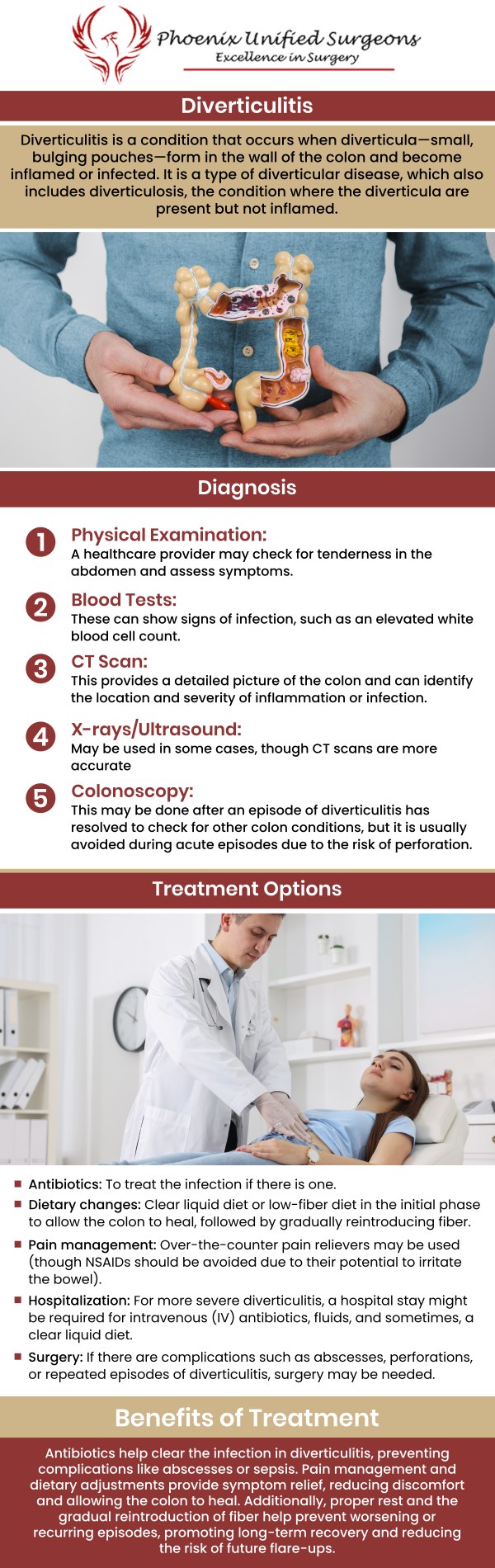
Table of Contents:
Is diverticulosis a serious condition?
What are the symptoms of diverticulosis?
How is diverticulosis diagnosed?
How do I take care of myself while living with diverticulosis?
Do the Surgeons at Phoenix Unified, Including Dr. J. Brian Brizendine, M.D., Treat Diverticulosis?
Diverticulosis is a common condition where small pouches, called diverticula, develop in the wall of the colon. For many people, diverticulosis does not cause symptoms and is often discovered incidentally during imaging studies or a colonoscopy performed for another reason.
Most individuals with diverticulosis are able to live normal, healthy lives without complications. However, at Phoenix Unified Surgeons, we understand that diverticulosis can, in some cases, lead to more serious concerns. If one or more diverticula become inflamed or infected—a condition known as diverticulitis—patients may experience significant abdominal pain, fever, nausea, or changes in bowel habits. Rarely, complications such as abscesses, colon perforation, or severe bleeding can occur, sometimes requiring urgent hospitalization or surgical intervention.
Our experienced surgical team specializes in evaluating and treating complicated cases of diverticulosis and diverticulitis. Should you develop symptoms such as severe abdominal pain, persistent fever, or rectal bleeding, it is important to seek prompt medical attention. Our surgeons can provide advanced diagnostic and treatment options, including minimally invasive and laparoscopic surgery when necessary.
For patients diagnosed with diverticulosis, we recommend maintaining a healthy lifestyle with a high-fiber diet, regular exercise, and proper hydration to help reduce the risk of complications. Routine follow-up with your healthcare provider is essential to monitor your condition and address any changes.
Diverticulosis occurs when small pouches, called diverticula, form in the wall of your colon. This condition is quite common, especially as people age, and is often found incidentally during colonoscopies or imaging studies performed for other reasons.
Most individuals with diverticulosis do not experience noticeable symptoms. You might experience mild abdominal discomfort or cramping, usually on the lower left side, or changes in bowel habits such as constipation or, less commonly, diarrhea. Some patients also report bloating or increased gas.
It’s important to monitor your symptoms and seek professional advice if they change. If these pouches become inflamed or infected—a condition known as diverticulitis—symptoms can become much more severe, including sharp abdominal pain, fever, and sometimes rectal bleeding. These situations may require prompt surgical evaluation and intervention, which is where the expertise of the team at Phoenix Unified Surgeons becomes essential.
If you have been diagnosed with diverticulosis or are experiencing unexplained digestive symptoms, our board-certified surgeons are here to provide comprehensive evaluation and tailored treatment options, ranging from dietary recommendations to advanced surgical care when needed.
Diverticulosis is most commonly found in adults over the age of 40 and may present with mild abdominal discomfort, bloating, or changes in bowel habits. However, it often remains asymptomatic and is sometimes discovered during routine screenings.
How We Diagnose Diverticulosis
Our approach to diagnosing diverticulosis begins with a thorough review of your medical history and a physical examination. If diverticulosis is suspected, our surgeons may recommend one or more of the following advanced diagnostic procedures:
• Colonoscopy: As a leading diagnostic tool, colonoscopy allows our surgeons to directly visualize the inside of your colon and rectum. Using a flexible camera, we can identify the presence of diverticula—small pouches that form in the colon wall—and rule out other potential causes of your symptoms such as polyps or tumors. Colonoscopy is also routinely performed for colorectal cancer screening, during which diverticulosis is often detected.
• Imaging Studies: CT scans provide detailed images of the colon and surrounding tissues, helping us identify inflamed or infected diverticula and assess any associated complications. Less commonly, a barium enema X-ray may be utilized to highlight abnormalities in the colon.
• Laboratory Tests: While blood tests are not used to diagnose diverticulosis itself, they may be ordered to evaluate for infection or inflammation if diverticulitis is a concern.
At Phoenix Unified Surgeons, accurate diagnosis is the first step toward effective management of diverticulosis. If you are experiencing gastrointestinal symptoms or would like to schedule a screening, our surgical team is here to guide you every step of the way, using state-of-the-art diagnostic technology and compassionate care.
• Diet and Nutrition for Colon Health
One of the most effective ways to manage diverticulosis is by adopting a diet high in fiber. A fiber-rich diet softens and adds bulk to your stool, making it easier to pass and reducing strain on your colon. We recommend incorporating whole grains, fresh fruits, vegetables, legumes, and nuts into your meals. To minimize discomfort such as gas or bloating, gradually increase your fiber intake and make sure to drink plenty of water throughout the day—this helps fiber move smoothly through your digestive system.
• Staying Physically Active
Regular physical activity not only benefits your overall health but also helps stimulate normal bowel function and reduces pressure within the colon. Activities like walking, swimming, or cycling are excellent choices and can easily be integrated into your daily routine.
• Monitoring and Managing Bowel Habits
Pay attention to your body’s signals and avoid delaying bowel movements, as holding back can lead to constipation and added strain on the colon. If you continue to have trouble with constipation, our surgeons can discuss whether a fiber supplement or stool softener might be appropriate for you.
• Medication and Lifestyle Considerations
Unless prescribed by your doctor, try to avoid nonsteroidal anti-inflammatory drugs (NSAIDs) such as ibuprofen, as they can raise the risk of diverticular complications. Additionally, if you smoke, we strongly encourage you to quit—smoking is linked to a higher risk of diverticulosis complications.
• Partnering with Phoenix Unified Surgeons
Regular follow-up with your healthcare provider is essential. Please notify us promptly if you experience any new symptoms, such as abdominal pain, fever, or changes in your bowel habits. Early intervention can prevent more serious issues and help you maintain the best possible quality of life.
Yes, the board-certified surgeons at Phoenix Unified, including specialists like Dr. J. Brian Brizendine, M.D., are highly experienced in treating conditions of the colon and rectum. While Diverticulosis is the condition of having small pouches (diverticula) in the colon wall, their surgical expertise is centered on managing the more severe complication: Diverticulitis.
Phoenix Unified explicitly lists Colon Surgery for Diverticulitis as a key service. Diverticulitis, which occurs when these pouches become inflamed or infected, often requires surgical intervention—specifically, a colon repair or resection—when conservative treatments fail or complications arise. Utilizing advanced techniques like Robotic and Minimally Invasive Surgery, the surgical team provides safe, effective care for patients. If you have been diagnosed with diverticular disease and require specialized surgical management for recurrent or complicated diverticulitis, Phoenix Unified offers expert, integrated surgical care. The team also includes Dr. Debora Fox-McClary, M.D., and Dr. Antonino S. Cammarata, D.O.
At Phoenix Unified Surgeons, our priority is your long-term wellness. We’re here to support you every step of the way with care and personalized recommendations for managing diverticulosis. For more information, contact us or book your appointment online. Our office is conveniently located at 20333 N 19th Avenue, Ste 230 Phoenix, AZ 85027. We serve patients from Phoenix AZ, Sun City AZ, Peoria AZ, Surprise AZ, Glendale AZ, Scottsdale AZ, and surrounding areas.
Check Out Our 5 Star Reviews



Additional Services You May Need
▸ Colon & Rectal Surgery
▸ Gallbladder Surgery
▸ Colonoscopy
▸ Wound Care
▸ Hernia Repair
▸ General Surgery
▸ Robotic and Minimally Invasive Surgery
▸ Appendectomy
▸ Colon Repair/Resection
▸ Lipoma & Cyst Removal
▸ Endoscopy and Colonoscopy
▸ Abdominal Pain
▸ Colon surgery for Diverticulitis
▸ Colon surgery for Colon Cancer
▸ Hemorrhoids
▸ Anal Fistulas
▸ Anal Pain Surgeries
▸ Colostomy Avoidance Surgery
▸ Fecal Incontinence Surgery
▸ Crohn’s Surgery
▸ Ulcerative Colitis Surgery
▸ TIF Procedure
▸ Colon Fistulas
▸ Groin Hernia
▸ Inguinal Hernias
▸ Hiatal Hernia
▸ Colon-Bladder Fistulas
▸ Colon Diverticulitis
▸ Hiatal Hernia Surgeon
▸ Gastroesophageal Reflux Disease
▸ Colon and Rectal Cancer Surgical Management
▸ Incisional Hernia
▸ Giant Hernias
▸ Skin Cancer
▸ Breast Cancer Screening
▸ Open and Nonhealing Wounds
▸ Incisionless Hiatal Hernia Repair
▸ Lipomas and Common Skin Growths
▸ Surgical Second Opinions
▸ Feeding Tube Access Including PEGs and G Tubes
▸ Upper GI Endoscopy Care
▸ Board-Certified General Surgeons, Colon and Rectal Surgeons
▸ Colon and Rectal Surgeon vs. Gastroenterologist
▸ Colon-Vaginal Fistulas
▸ Port Placements for IV Access
▸ Colostomy Reversal
▸ Abdominal Wall Hernia


 Send Text
 How May I Help You?